


HOME PREPAREDNESS / 5-MINUTE READ
7 Questions Families Face When a Blackout Cuts Off Their Water
Picture the morning after a windstorm. Your daughter slides her blue water bottle across the breakfast table. “Can you fill mine, too?” You turn the tap. A trickle, then air. There’s one gallon left in the pantry.
BEFORE THE NEXT OUTAGE, WALK THROUGH THAT MORNING.
TLDR: You remembered the flashlights. You bought bottled water. What’s missing is a way to refill those bottles if the well stays off. Here’s how that morning could play out with a charged drinking water filter and a freshwater creek within reach.
1. How Far Will That Last Gallon Go?
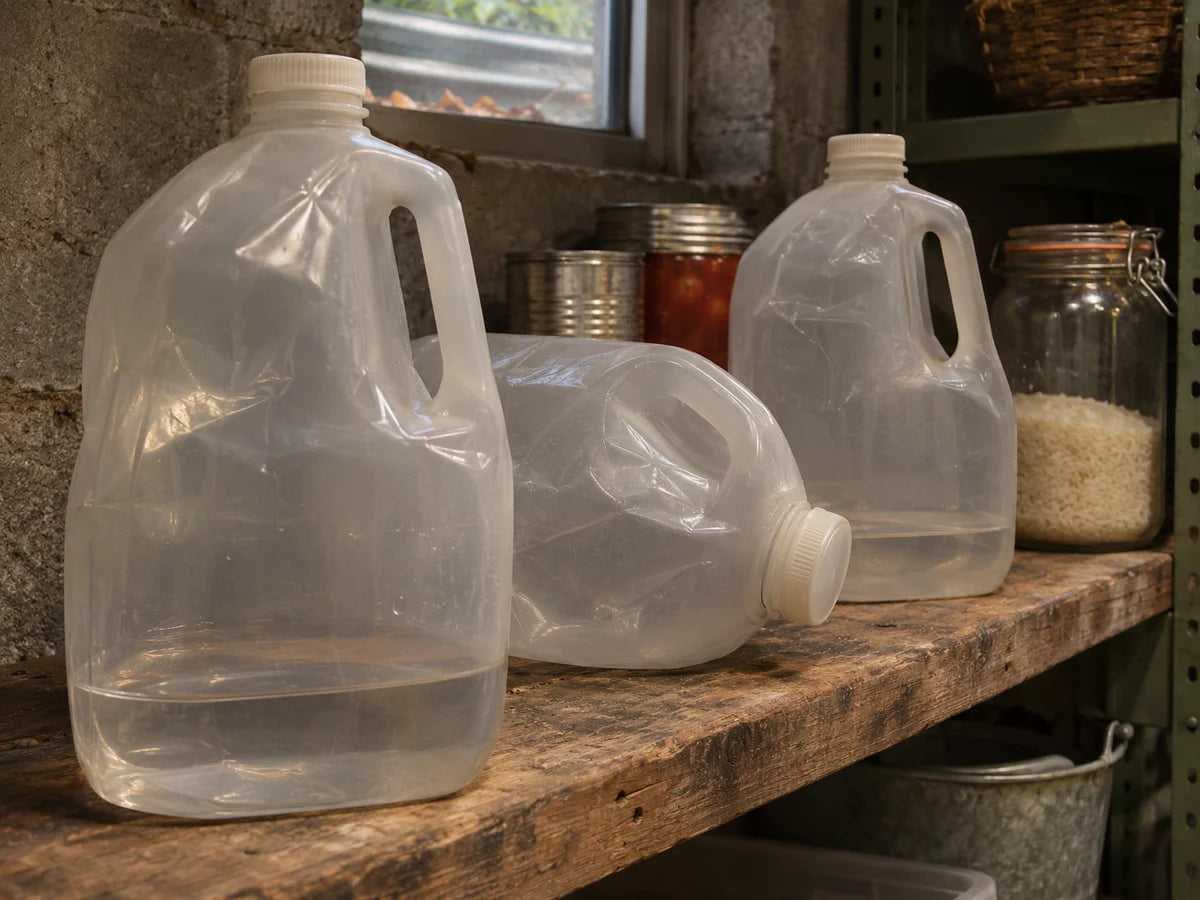
Last night, the water in the pantry looked like plenty. This morning you’re measuring it into a pot of oatmeal on the camp stove. Your partner sets out four cups. The level in the jug drops before anyone’s had a drink.
A family of four needs at least 12 gallons stored for three days. That’s based on the CDC’s minimum of one gallon per person per day. You fill your daughter’s bottle from the jug you have. Over breakfast, you work out where to get the next one.

2. Where Will the Water for Dinner Come From?
You turn the soup packet over. “Add four cups of water.” That’s enough to fill both kids’ 16-ounce bottles for tomorrow. You look at the last jug on the counter. If the well stays off tonight, what will they drink in the morning?
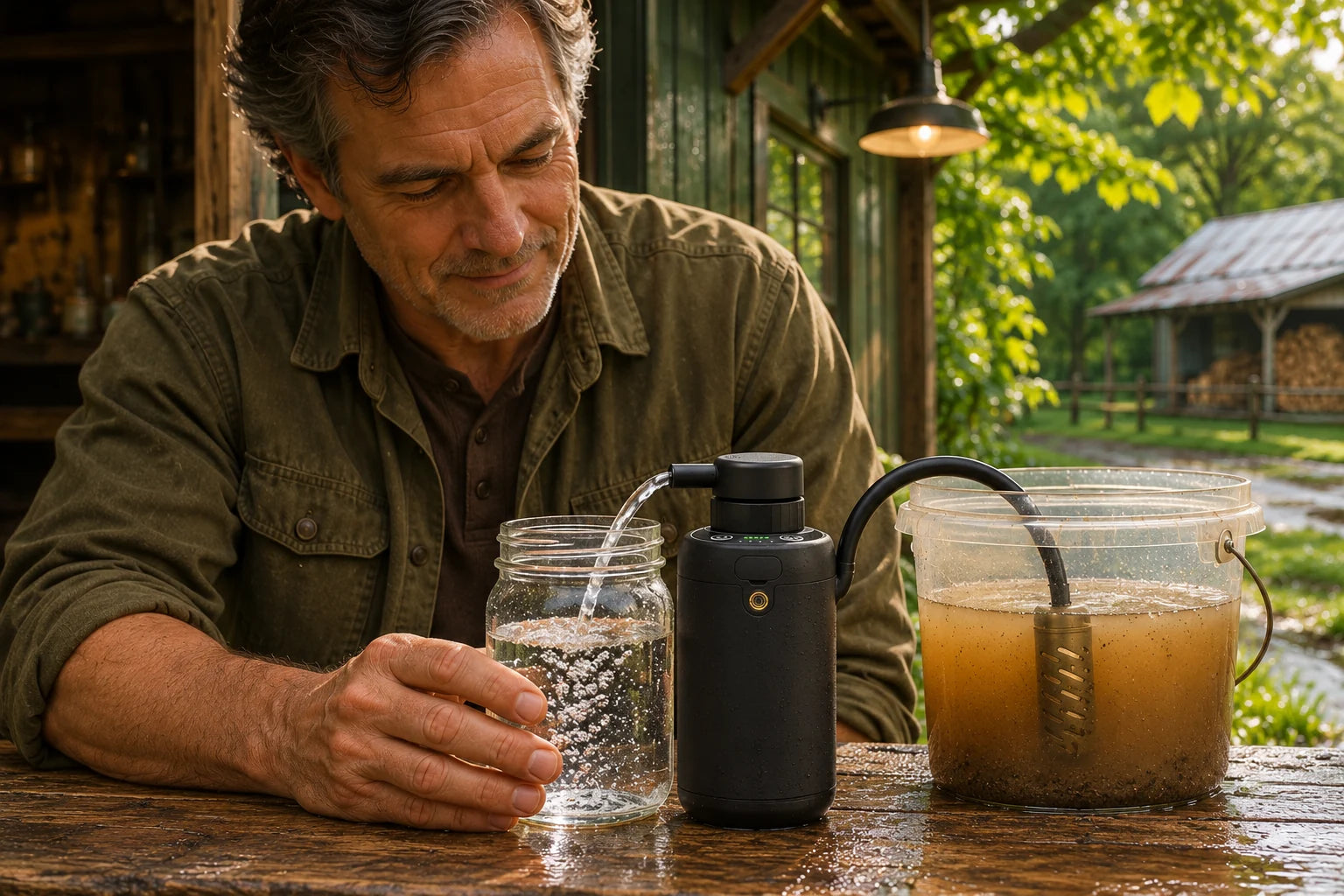
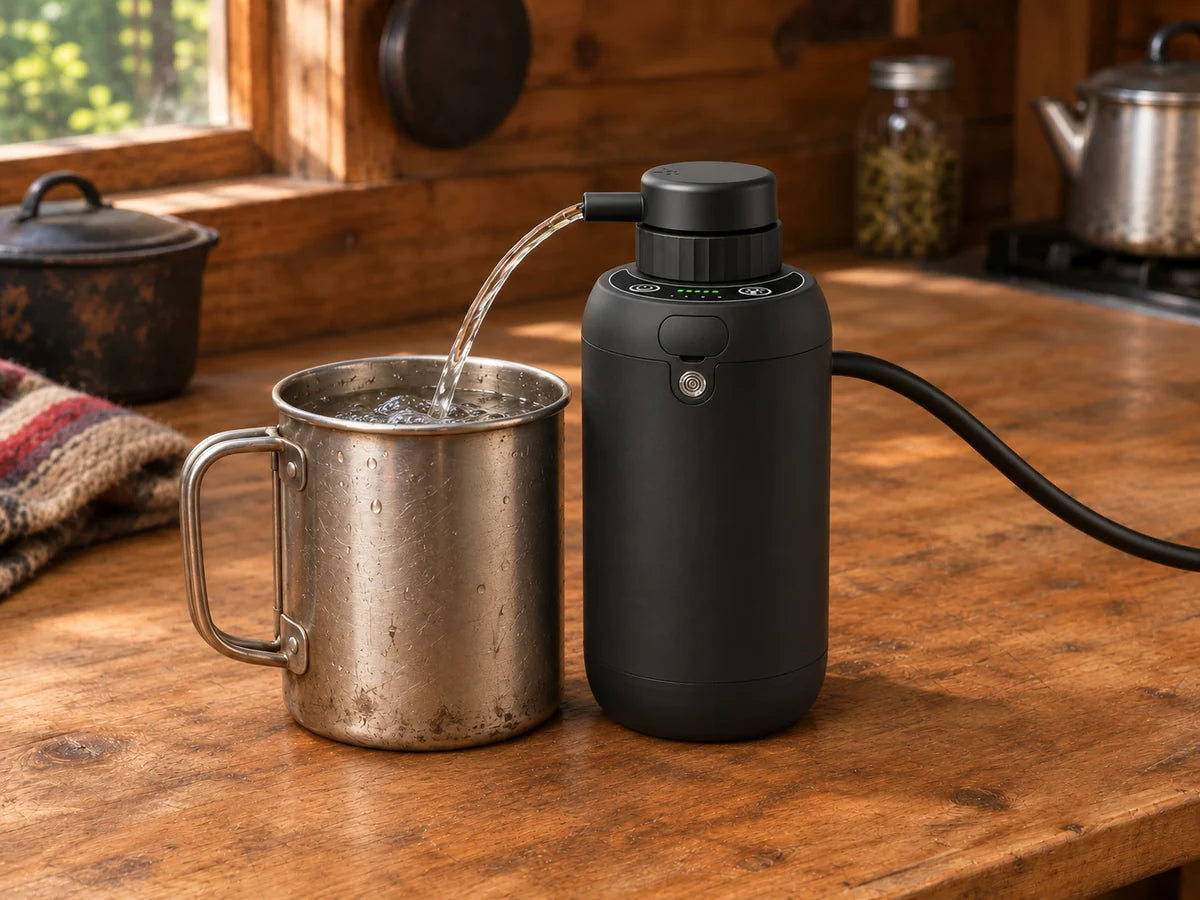
You take the filter, two empty jugs and a bucket to the creek. The first scoop comes up cloudy. Once the sand settles, you lower the intake above it and press the button. The screen catches leaves and the finer stages trap silt as the pump fills your clean jug. Back home, you can boil that refill for soup and save the stored water for the kids.
3. What About the Things You Can’t See?
The water near the top of the bucket looks clear enough to pour. But this is the water you’ll take home to your kids. Mud is easy to spot. Bacteria and microscopic parasites are another matter.
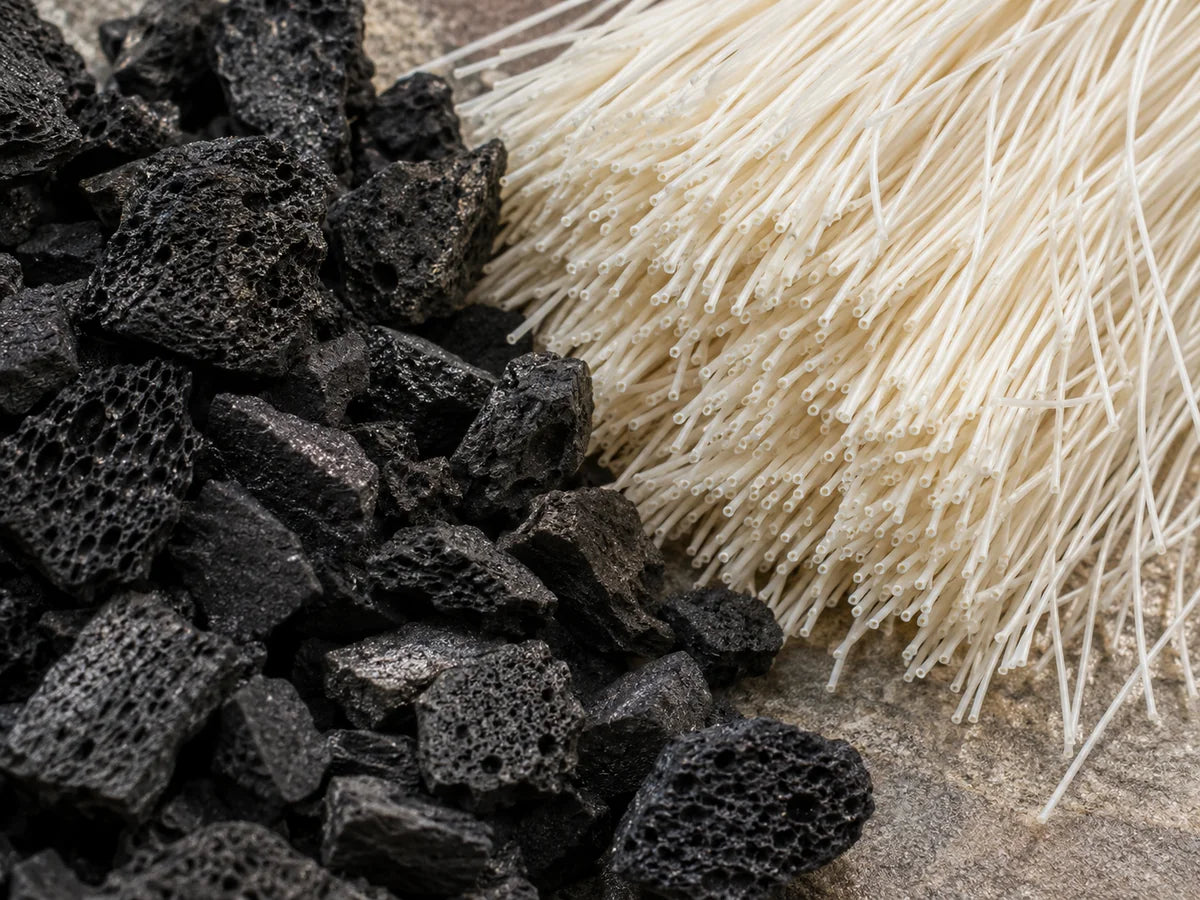
The pump draws water through six filtration stages. Its 0.01-micron hollow-fiber membrane is designed to trap bacteria and protozoan parasites. Activated carbon helps reduce off-tastes and odors. Since this creek’s water quality is unknown, you’ll boil the filtered water back home before anyone drinks it.
4. How Do You Bring a Gallon Back for Everyone?
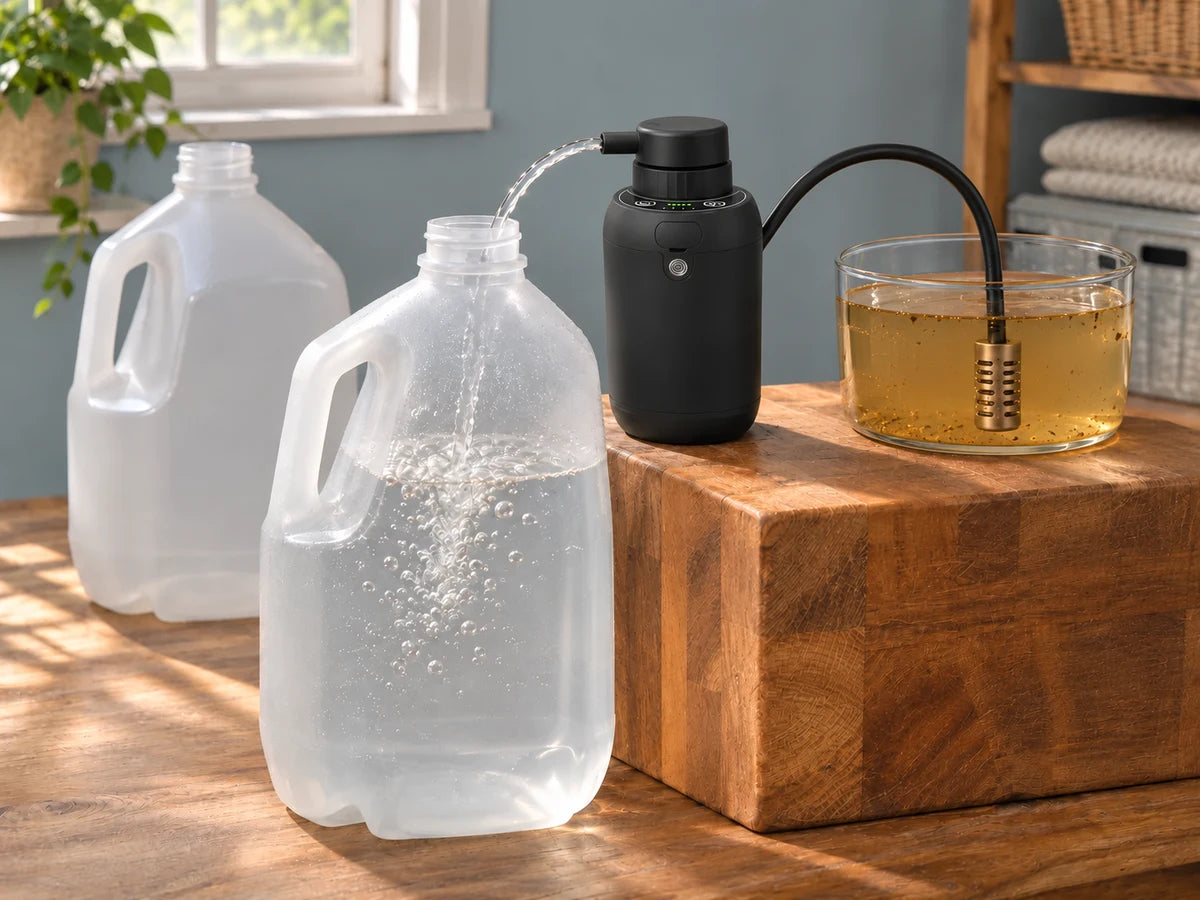
There’s a filter straw in your pack. It makes sense when you’re hiking alone and want a sip. Today three people are back at the house, and dinner needs water, too. You set the first empty jug under the electric filter’s outlet.
One US gallon takes about 5½ minutes at the rated maximum. Press the button. At up to 23 fl oz per minute, you can watch the water rise toward the neck, cap the jug and carry it home. Silty water or a used filter can slow the flow.
FAMILY WATER BACKUP
Give your family a way to refill that last jug.
CLAIM UP TO 60% OFF →BLACK FRIDAY ONLY · WHILE SUPPLIES LAST
Pack the filter with your empty containers now. When the well goes quiet, you’ll know where to find both.
5. Who’s Going to Pump the Second Jug?
The first jug is full. You move the second under the outlet and press the button again. While the motor runs, you stay beside it, steady the narrow opening with one hand and screw the cap onto the first jug with the other.
The motor does the pumping for each refill. Back in the kitchen, you boil the filtered creek water on the camp stove. Once it cools, your daughter tops up her blue bottle herself. There’s water left for supper, too.
6. What If the Well Is Still Off Tomorrow?
That evening, your phone lights up with an update from the power company. Repairs will continue tomorrow. You look at the empty places on the pantry shelf and think about another breakfast for four.
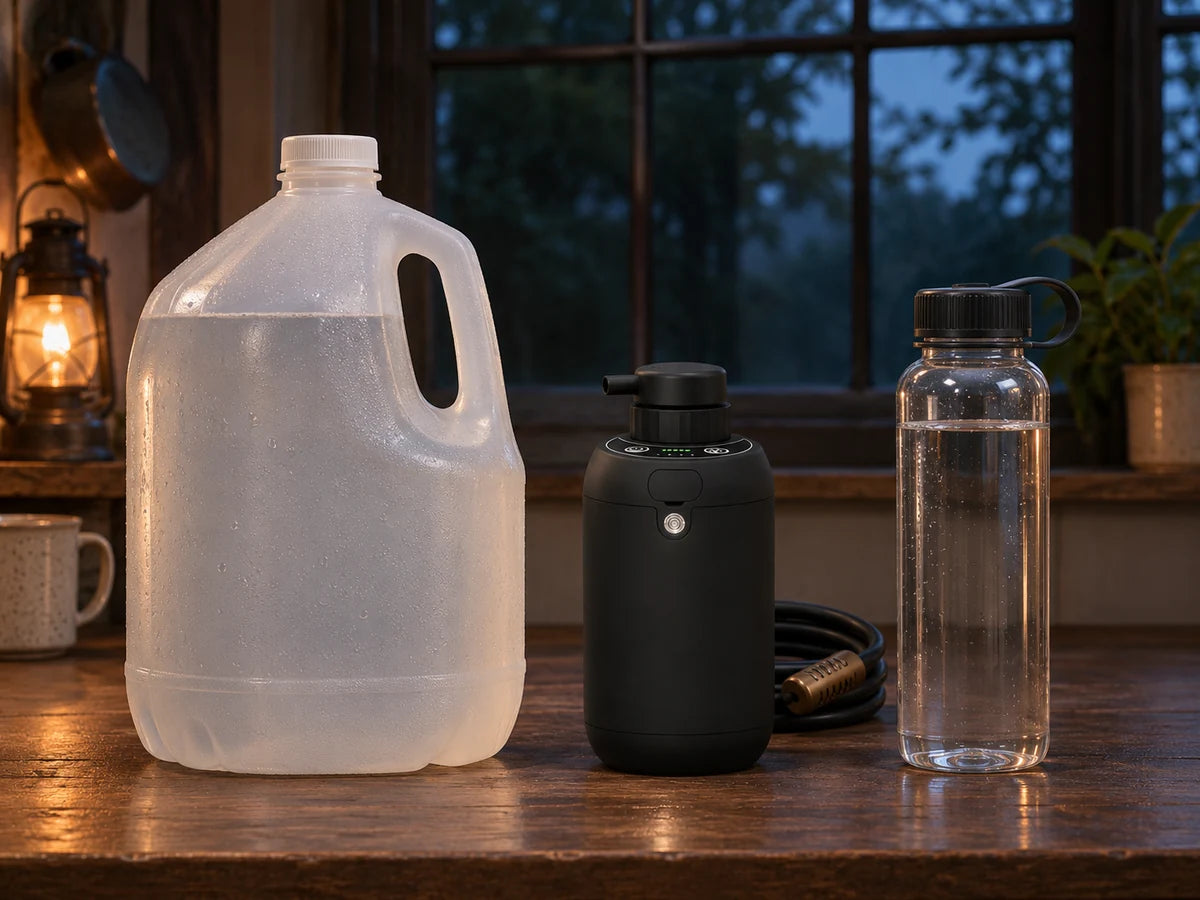
One full charge is rated for up to 53 gallons. That’s up to 200 liters, or 400 half-liter bottle refills. The filter runs on its own battery, so you can take it back to the creek in the morning while the well pump is still off. Actual output depends on conditions.
Be ready for a second morning without running water.
CLAIM UP TO 60% OFF →BLACK FRIDAY ONLY · WHILE SUPPLIES LAST
Charge the filter while the lights are on. You can draw from a freshwater source tomorrow, even if the utility still has crews on the road.
7. What Goes With You If You Leave Tonight?
Then your sister calls. Her power is back, and there’s room at her place if the house gets cold. Your daughter reaches for her blue bottle. You reach for the small bag beside the water jugs.
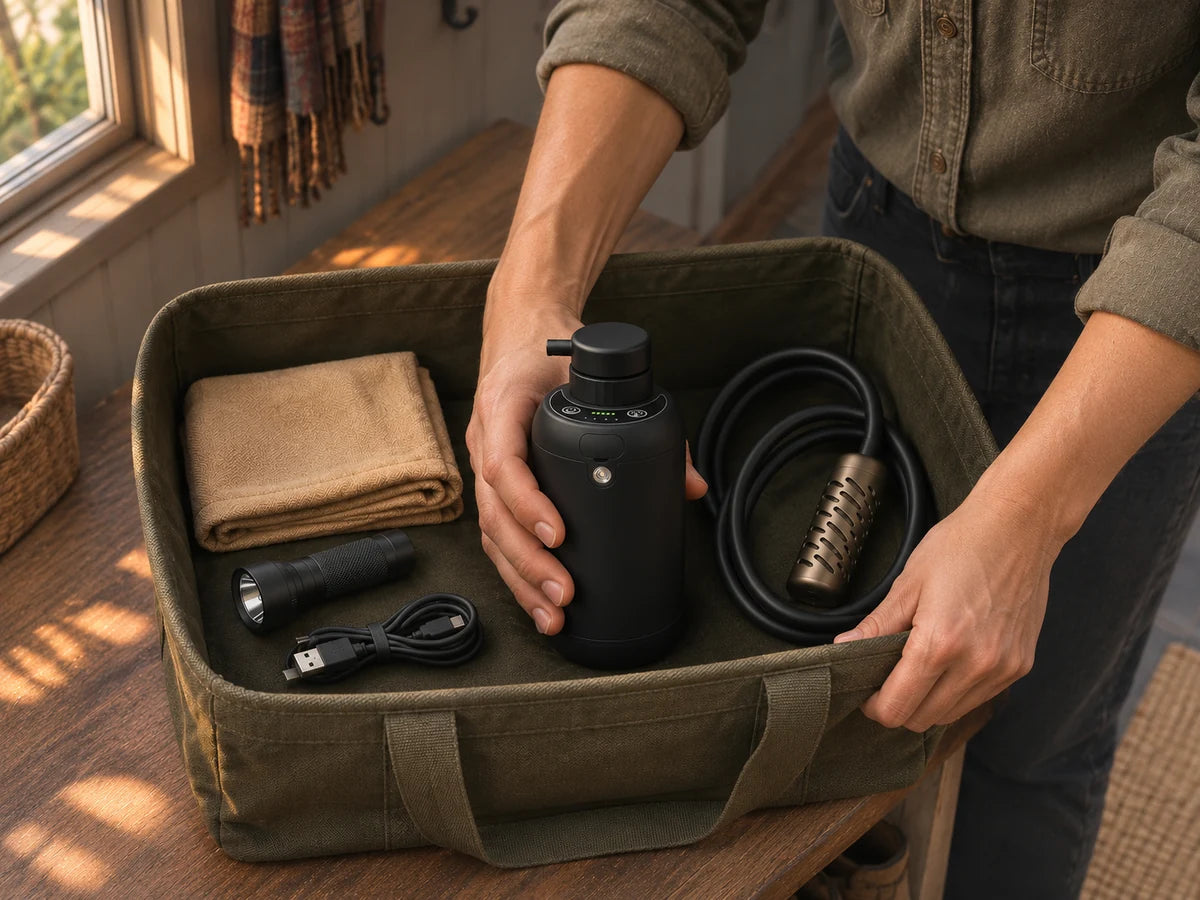
The pump, screened intake and USB-C cable pack together. Try one refill with clean water before the next storm. Clean and dry the kit as directed, recharge it and put the bag where everyone can find it. Whether you stay home or spend the night elsewhere, whoever packs the water knows what to grab.
What Belongs Beside Your Stored Drinking Water?
FILL FAMILY-SIZE JUGS
Move up to 23 fl oz per minute into a clean container.
FILTER EVEN IN A BLACKOUT
Run the pump from its own rechargeable battery.
TAKE THE KIT WITH YOU
Store the intake, pump and charging cable in one carry bag.

KNOW WHERE YOUR NEXT GALLON IS COMING FROM
Picture that breakfast table again. Your daughter asks for water. You can hand her the bottle you stored and still have a plan for tomorrow: a charged filter, a clean jug and a freshwater source you’ve picked out ahead of time.
CLAIM UP TO 60% OFFUse fresh water and follow local advisories. Avoid floodwater, salt water and sources exposed to fuel or chemical runoff. If the source’s safety is unknown, boil or disinfect after filtering and before drinking.